
Recovering Due to Nondisclosure of Vital Information
Contract Claims Insights | TILLIT LAW PLLC
The government has an implied duty to disclose information during the solicitation phase that is vital to the development of pricing or performance under the contract. If the government fails to disclose such vital information, it may be held liable for breach of contract under the superior knowledge doctrine. To be successful in such claims, the contractor must present specific evidence that it: (1) undertook performance without vital knowledge of a fact that affects performance costs or duration; (2) the government was aware that the contractor had no knowledge of and had no reason to obtain such information; (3) any provided specification either misled the contractor or did not put it on notice to inquire; and (4) the government failed to provide the relevant information. If the contractor produces evidence that satisfies these four conditions, the government is deemed to be in breach of contract for nondisclosure of vital information, and the contractor may recover damages for any resulting delays or increased costs of performance.
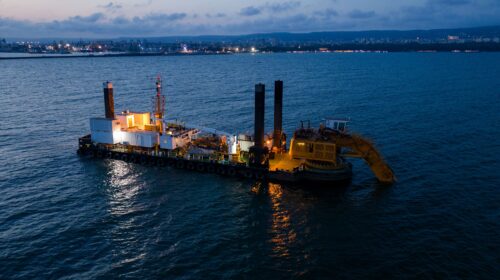
In Marine Industrial Construction, LLC v. United States, 158 Fed.Cl. 158 (2022), the Court of Federal Claims (COFC) held the government liable for withholding vital information impacting contract performance and costs. The U.S. Army Corps of Engineers (USACE) had awarded the contract in question for hydraulic dredging at the Quillayute River Waterway in La Push, Washington. The agency procured dredging services for the waterway every two to three years, with the 2014 solicitation in question markedly different from previous years. A portion of the waterway known as the boat basin, which had not been fully dredged since 1982, was added to the scope of the 2014 solicitation. Additionally, in an effort to shift from design-based specifications to performance-based specifications and to increase competition, the government removed warnings that the waterway may contain man-made debris, such as sunken boats, fishnets, machinery, and steel trolling wire. The solicitation also specifically stated that the government had no knowledge of any artificial obstructions, wreckage, or other materials that would require additional equipment for economical removal.
The successful offeror, who did not conduct a pre-bid site visit, had over 60 years of experience in dredging waterways, ports, and rivers. It submitted the lowest bid, which was 31% lower than the independent government estimate and significantly lower than all other bids. Upon commencement of performance, the contractor experienced various delays, which worsened when it began dredging the boat basin. It encountered man-made debris such as tires, wire, plastic, hose, metal, boat parts, nets, and cables, that clogged and disabled the dredging equipment nearly every day. Due to these performance issues and excessive delays, the government ultimately terminated the contract for default. Following the termination, the USACE reissued the solicitation in 2015, this time including the warnings from the pre-2014 solicitations. The resolicitation also warned offerors of the man-made debris in the boat basin, noting that certain portions of the basin had not been dredged since 1982. While the 2015 reprocurement was ongoing, the contractor filed claims for costs and delay days, including for the man-made debris it encountered. After the contracting officer (CO) denied the claims in their entirety, the contractor sued the government for breach of contract.
In its breach of contract claim relating to the government’s superior knowledge of the debris, the contractor argued that debris in the boat basin clogged and damaged its dredge, causing delays and increasing the project’s total cost. The contractor maintained that even a pre-bid site visit would not have revealed the underwater debris at issue. Meanwhile, the government argued that, although the 2014 solicitation removed the more specific pre-2014 warnings, it nevertheless warned offerors of miscellaneous debris and asserted that a pre-bid site visit would have alerted the contractor to the debris. The COFC began its analysis by pointing out that the first element of this superior knowledge claim was met as the contractor undertook performance without vital knowledge of the substantial quantities of man-made debris and sunken vessels it encountered in the boat basin. The Court stated that the record contained no evidence that the contractor knew of the substantial amounts of man-made debris that had accumulated in the basin for over thirty years. Additionally, the contractor had produced evidence, including photos of debris and daily construction reports that demonstrated the effect of the debris on its costs and performance. Thus, the Court determined that the first element was satisfied.
The Court also found that the second element was met, as the government was aware that the contractor had no knowledge of and had no reason to obtain the relevant information. The decision noted that the solicitation simultaneously warned of miscellaneous natural debris such as forest trash, logs, and stumps while denying the government’s knowledge of man-made debris, artificial obstructions, or wrecks. However, based on warnings in pre-2014 solicitations, the government was well aware of the artificial obstructions in the waterway. Since the government made patently false representations denying its knowledge of artificial debris, the Court determined that the government was fully aware of the contractor’s lack of knowledge of the over thirty years of artificial debris and sunken vessels in the boat basin. In this regard, the Court noted an offeror’s right to rely on government-supplied specifications. Secondly, the contractor also had no reason to obtain the relevant information because even if it had conducted a pre-bid site visit, it would not have known of the artificial debris, which was invisible under the water. Even if the contractor should have expected some artificial debris in the water, the Court found that it could not have ascertained that the boat basin contained more than 30 years of debris. Therefore, the second element was also met.
Next, the Court found that the third element of the superior knowledge claim was met because the government-supplied specification misled the contractor or did not put it on notice to inquire. The COFC again pointed to the government’s false representations regarding its knowledge (or lack thereof) of man-made debris. Additionally, the project manager acknowledged during his deposition that on previous occasions the USACE had attempted to and had difficulties in getting certain Tribe members to stop dumping garbage in the marina. This acknowledgment, together with the warnings in the pre-2014 solicitations, demonstrated that the government was well aware of the artificial debris and had misled the contractor. Furthermore, even a site visit would not have revealed the underwater debris. Thus, the Court found that the third element was also met. Finally, the fourth element was met because, although the government had provided the relevant information on artificial debris and wreckage in the pre-2014 solicitations and the 2015 resolicitation, it failed to provide this information in the 2014 solicitation. Consequently, the COFC found that the contractor had satisfied all four elements of its superior knowledge claim with respect to the artificial debris and granted it summary judgment on this claim.
The implied duty to disclose vital information requires the government to provide during the solicitation phase, information material to the development of pricing or performance. This implied duty to disclose vital information is considered distinct but consistent with the government’s implied warranty of specifications. When the government fails to disclose such vital information pre-award, it may later be held liable for the contractor’s resulting damages during performance. To successfully recover in a superior knowledge claim, the contractor must produce evidence that it (1) undertook performance without vital knowledge of a fact that affects performance costs or duration; (2) the government was aware that the contractor had no knowledge of and had no reason to obtain such information; (3) any provided specification either misled the contractor or did not put it on notice to inquire; and (4) the government failed to provide the relevant information. As demonstrated in the above case, contractors may recover damages for the government’s breach of contract under the superior knowledge doctrine by producing evidence that satisfies the four elements.
This Federal Contract Claims Insight is provided as a general summary of the applicable law in the practice area and does not constitute legal advice. Contractors wishing to learn more are encouraged to consult the TILLIT LAW PLLC Client Portal or Contact Us to determine how the law would apply in a specific situation.